
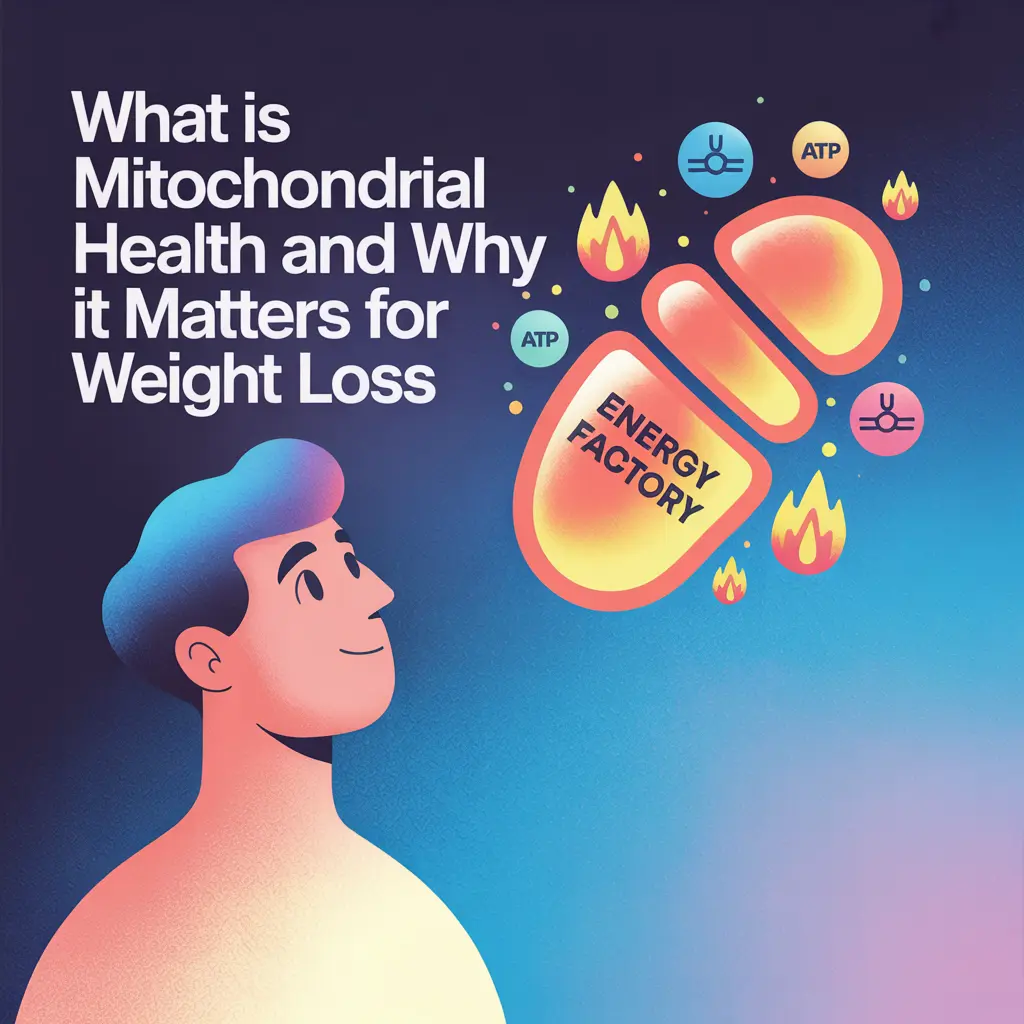
Mitochondrial health refers to how well your mitochondria perform their core job: producing usable energy for your body. These tiny structures inside nearly every cell convert the food you eat and the oxygen you breathe into ATP, adenosine triphosphate, the energy currency that powers everything from muscle contraction to hormone signaling.
When mitochondria are working efficiently, your body runs like a well-tuned engine. When they’re sluggish or damaged, energy production drops, metabolism slows, and fat loss becomes an uphill battle.
This is why mitochondria sit at the center of metabolism and weight regulation. They determine how efficiently calories are burned, whether fat is used as fuel, and how well your body adapts to exercise, dieting, and daily energy demands. In short: weight loss isn’t just about how much you eat, it’s about how well your cells can use that energy.
In the sections ahead, we’ll break down what mitochondrial health really means, how these cellular powerhouses influence fat burning, and why improving their function can make weight loss more sustainable and less frustrating.
What Is Mitochondrial Health?
Mitochondrial health describes the efficiency, quantity, and resilience of mitochondria within your cells. Healthy mitochondria are able to produce energy consistently, respond to metabolic stress, and adapt to changes like exercise, fasting, or calorie reduction. Poor mitochondrial health, on the other hand, means less energy output, greater fatigue, and impaired metabolic flexibility.
At the core of mitochondrial function is ATP production through oxidative phosphorylation. This process occurs inside the mitochondria, where nutrients, glucose, fatty acids, and amino acids, are converted into ATP using oxygen. The more efficient this process, the more energy your body can generate from the same amount of food.
Beyond energy production, mitochondria play a critical role in energy balance and metabolic efficiency. They help determine whether calories are burned for fuel or stored as fat, regulate heat production, influence insulin sensitivity, and control how well cells respond to physical activity. When mitochondrial function is optimized, metabolism becomes more flexible, shifting smoothly between burning carbohydrates and fats depending on your body’s needs.
In essence, mitochondrial health is the foundation of metabolic health. If your mitochondria are underperforming, weight loss efforts often stall. If they’re thriving, fat loss becomes a natural byproduct of a body that knows how to generate, and use, energy efficiently.
Defining Mitochondria: The Cell’s Powerhouses
Mitochondria are often described as the power plants of the cell, and for good reason. These tiny, membrane-bound organelles are responsible for generating the vast majority of the energy your body needs to function. Every movement you make, every thought you think, and every calorie you burn depends on how well your mitochondria are working.
What Mitochondria Do
The primary role of mitochondria is ATP production, supplying roughly 90% of the cell’s usable energy. Through a tightly regulated process involving nutrient breakdown and oxygen use, mitochondria convert food into ATP, which fuels cellular activity throughout the body.
This energy demand is especially high in organs that never truly “rest.” Your muscles, heart, and brain are packed with mitochondria because they require constant, reliable energy. When mitochondrial output is strong, these tissues perform efficiently. When it falters, fatigue, weakness, and metabolic slowdown often follow.
Additional Critical Functions
Mitochondria do far more than produce energy. They play a key role in regulating oxidative stress by managing reactive oxygen species (ROS), the natural byproducts of energy production. In healthy mitochondria, ROS are kept in balance. In dysfunctional ones, ROS accumulate, damaging cells and promoting inflammation.
Mitochondria are also central to apoptosis, the process of programmed cell death. This mechanism allows the body to remove damaged or dysfunctional cells before they cause harm. When mitochondria lose this regulatory ability, unhealthy cells can persist, contributing to tissue dysfunction and metabolic disease.
What Causes Mitochondrial Dysfunction
Mitochondrial dysfunction can develop through several pathways. Genetic mutations may impair mitochondrial enzymes or DNA, reducing energy output from birth. Environmental toxins, such as heavy metals, pesticides, and air pollutants, can damage mitochondrial membranes and interfere with ATP production.
Equally important are lifestyle and dietary factors. Chronic overeating, ultra-processed foods, sedentary behavior, poor sleep, excessive alcohol intake, and prolonged stress all place strain on mitochondria. Over time, this reduces their efficiency, number, and ability to adapt, setting the stage for metabolic problems and weight gain.
The Link Between Mitochondrial Health and Weight Loss
Weight loss is not just a matter of calories in versus calories out, it’s a matter of how efficiently your body can convert stored energy into usable fuel. That process happens inside the mitochondria.
How Healthy Mitochondria Burn Fat
One of the mitochondria’s most important roles in fat loss is beta-oxidation, the process by which fatty acids are broken down and converted into ATP. When mitochondria are healthy, this pathway runs smoothly, allowing fat to be used as a primary energy source, especially during fasting, exercise, or calorie restriction.
Efficient mitochondria also support a higher resting metabolic rate, meaning you burn more calories even at rest. This creates a metabolic environment where fat loss can occur without extreme dieting or constant hunger.
What Happens in Obesity
In obesity and chronic metabolic stress, mitochondria often become fragmented and dysfunctional. Instead of forming efficient networks, they break apart, reducing their ability to oxidize fat. This leads to a sharp drop in fat-burning efficiency.
At the same time, dysfunctional mitochondria produce excess reactive oxygen species, increasing inflammation and oxidative stress. This inflammatory state further impairs insulin sensitivity and encourages the body to store, rather than burn, fat, creating a vicious cycle that makes weight loss increasingly difficult.
Why Calorie Cutting Alone Isn’t Enough
Traditional dieting focuses on energy balance, eat less, move more. But when mitochondria are impaired, the real problem is energy dysfunction. Your body may respond to calorie restriction by slowing metabolism, conserving energy, and resisting fat loss.
Sustainable weight loss comes from metabolic optimization, not starvation. Improving mitochondrial health allows your body to process energy efficiently, burn fat more readily, and maintain weight loss without constant metabolic pushback. In other words, fixing the engine matters more than simply reducing the fuel.
Improving Mitochondrial Function for Fat Loss
Improving mitochondrial health isn’t about chasing hacks, it’s about creating the conditions your cells need to produce energy efficiently and burn fat consistently. The most effective strategies combine nutrition, movement, gut health, and lifestyle protection.
Dietary Strategies
Calorie restriction, when applied moderately, has been shown to improve mitochondrial efficiency by reducing metabolic stress and enhancing energy production per calorie. Rather than extreme dieting, strategic reduction encourages mitochondria to operate more efficiently without triggering metabolic shutdown.
Intermittent fasting further amplifies this effect by giving mitochondria periods of low fuel availability, which stimulates fat oxidation and mitochondrial biogenesis. During fasting windows, the body shifts toward using stored fat for energy, strengthening mitochondrial fat-burning pathways.
Ketogenic and low-carb approaches push this adaptation even further by reducing reliance on glucose and increasing fatty acid oxidation. In this metabolic state, mitochondria become more efficient at burning fat for fuel, which can be particularly helpful for individuals with insulin resistance or stubborn weight loss.
Exercise and Movement
Physical activity is one of the strongest signals for mitochondrial growth and efficiency.
Aerobic training, such as walking, cycling, or swimming, increases mitochondrial density, meaning more mitochondria are produced within muscle cells. This directly improves endurance, fat utilization, and metabolic flexibility.
Resistance training complements this by improving metabolic efficiency. Building muscle increases the number of mitochondria-rich cells in the body, raising resting energy expenditure and improving insulin sensitivity, both key for sustainable fat loss.
Gut Health and Mitochondrial Support
The gut and mitochondria are more connected than most people realize.
A fiber-rich diet feeds beneficial gut bacteria, which produce short-chain fatty acids (SCFAs) like butyrate. These compounds enhance mitochondrial biogenesis, reduce inflammation, and improve energy metabolism.
Healthy gut–mitochondria signaling helps regulate energy balance, inflammation, and fat storage. When gut health is compromised, mitochondrial function often suffers, slowing metabolism and increasing weight gain risk.
Environmental and Lifestyle Protection
Mitochondria are highly sensitive to environmental stress.
Reducing toxin exposure, from pesticides, heavy metals, air pollution, and excessive alcohol, helps protect mitochondrial membranes and enzymes critical for ATP production.
Equally important are sleep, stress management, and recovery. Poor sleep and chronic stress disrupt hormonal signaling and increase oxidative stress, placing additional strain on mitochondria. Consistent rest allows cellular repair processes to restore mitochondrial efficiency.
Signs Your Mitochondria May Be Underperforming
When mitochondria struggle, the effects are often subtle at first, but persistent.
- Low energy and chronic fatigue, even with adequate sleep
- Weight loss resistance, despite calorie control or exercise
- Brain fog, slow recovery, and reduced exercise tolerance
These symptoms often point to metabolic inefficiency rather than lack of willpower.
Can Supplements Support Mitochondrial Health?
Certain nutrients play a direct role in mitochondrial energy production, including compounds involved in electron transport, antioxidant defense, and fatty acid metabolism.
Supplementation may be useful for individuals with nutrient deficiencies, high oxidative stress, or increased metabolic demands. In these cases, targeted support can help restore mitochondrial function.
However, lifestyle always comes first. Supplements can enhance mitochondrial performance, but they cannot compensate for poor sleep, inactivity, ultra-processed diets, or chronic stress. They work best as support, not substitutes.
Thinking About Taking Supplements? Read This First.
Get honest supplement breakdowns, ingredient analysis, and real-world usage guidance, based on research, not hype.
Key Takeaways: Why Mitochondrial Health Matters for Weight Loss
Mitochondria determine how efficiently your body converts food and stored fat into usable energy. When they function well, fat loss becomes a natural outcome of healthy metabolism rather than constant restriction.
Focusing on long-term metabolic health, rather than short-term dieting, creates sustainable weight loss and better energy levels. This approach benefits those struggling with stubborn fat, low energy, metabolic slowdown, or repeated dieting plateaus.
Ultimately, mitochondrial optimization shifts weight loss from a battle of willpower to a process of cellular efficiency.

Leave a comment
Your email address will not be published. Required fields are marked *